


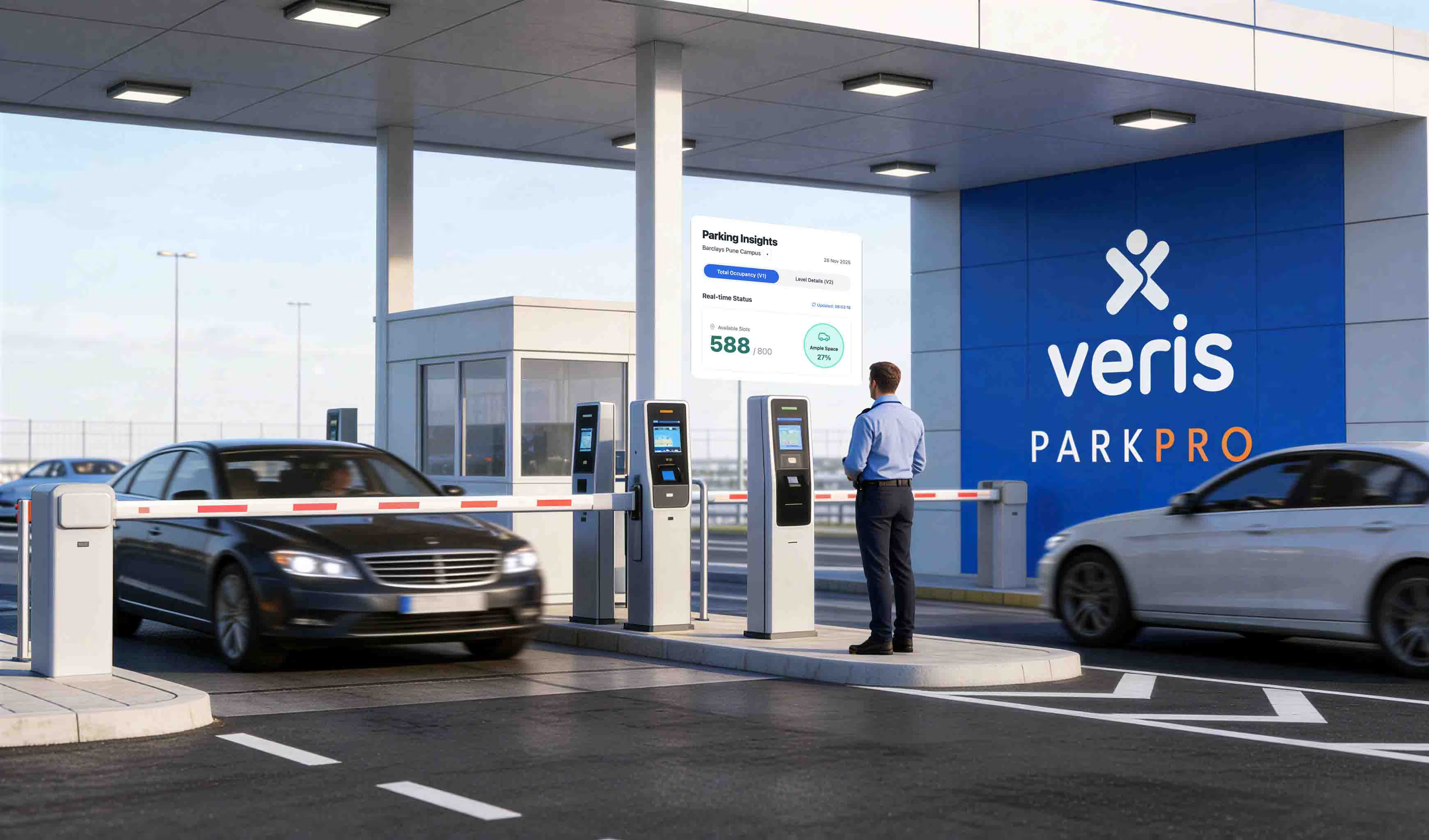
Parking often becomes an unplanned friction point in the workday. Research from the National Parking Association (NPA) indicates that employees in dense commercial zones can spend 8–15 minutes navigating entry queues or searching for parking during peak hours.
Facility teams, meanwhile, manage daily parking demand through emails, messages, and manual logs, processes that offer limited real-time visibility. The result is predictable: delays at entry points, disrupted schedules, strained visitor experiences, and recurring operational challenges across workplaces. Smart parking creates structure around this complexity by using automation, access authentication, and real-time occupancy insights to support smoother workplace movement.
In this guide, you’ll explore how smart parking works, the technologies that enable it, the operational advantages it brings, and the implementation steps for office campuses. This resource is designed for facility managers, workplace admins, IT and security teams, and real estate leaders who oversee daily employee and visitor mobility.
What is smart parking?
Smart parking system is a coordinated way of managing parking spaces using digital tools, automation, and real-time data. Instead of relying on manual logs, verbal approvals, or guesswork at the gate, a smart parking system uses technology to identify vehicles, assign spaces, authenticate entry, and record activity throughout the day.
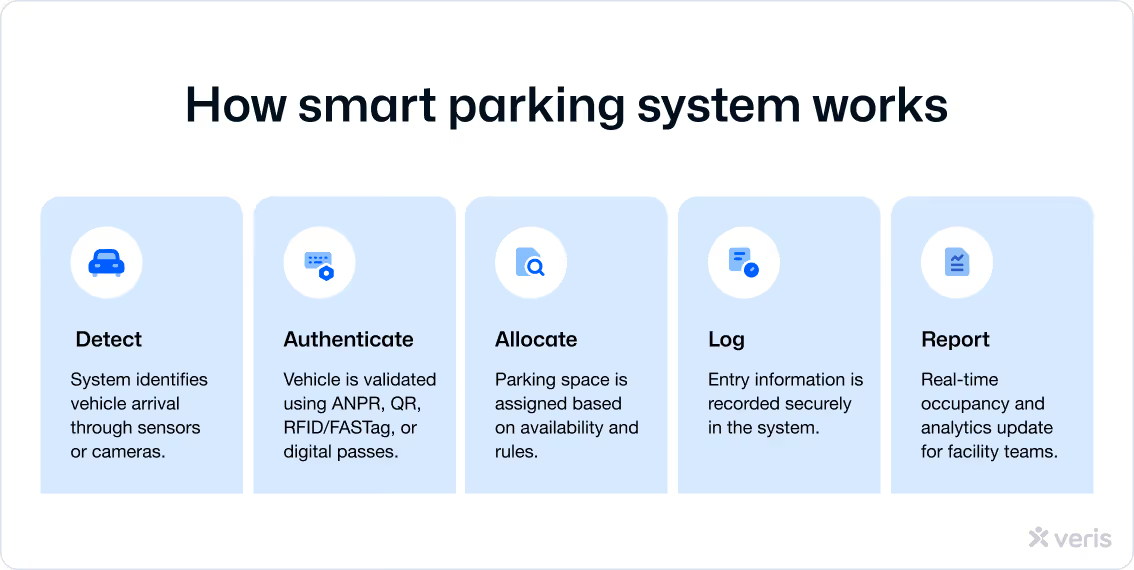
Industry bodies such as the National Parking Association (NPA) describe parking technology as ‘a foundation for improving mobility flow and operational consistency across modern facilities’.
Smart parking addresses the common workplace challenges of congestion at entry points, unclear space availability, and limited visibility for facility teams. It supports a predictable parking experience by enabling the system to detect arriving vehicles, allocate an appropriate space, authenticate the parker, log the visit, and report occupancy data in real time.
What are the key components of a smart parking system?
1. Software layer
- Unified dashboard for facility, admin, and security teams
- Real-time occupancy monitoring
- Rule-setting for employee, visitor, vendor, or fleet parking
- Alerts and reporting for operational planning
2. Hardware layer
- Cameras for license plate recognition
- QR scanners at gates or kiosks
- RFID or FASTag readers for frequent vehicles
- Barriers, bollards, or automated gates
- Optional sensors for slot-level detection
3. Authentication methods
Smart parking supports multiple ways to verify who is entering:
- ANPR/LPR (automatic license plate recognition)
- QR codes for visitors or temporary passes
- RFID/FASTag tags for recurring vehicles
- Digital or printed passes issued through workplace systems
These methods ensure that each vehicle is identified accurately, without manual checks or delays.
4. Gate automation elements
- Automated boom barriers
- Entry/exit kiosks
- Integrated displays showing entry confirmation or guidance
- Systems that trigger based on the authenticated identifier (plate, tag, or QR)
These components allow vehicles to move through the gate with minimal friction while maintaining full security records.
What are the real parking problems in modern offices today?
Even well-planned workplaces encounter recurring parking challenges. These issues often stem from high daily traffic, decentralised communication, and limited visibility into real-time parking conditions. Research from the National Parking Association (NPA) shows that parking demand in office zones is becoming increasingly dynamic due to hybrid schedules and fluctuating peak hours.
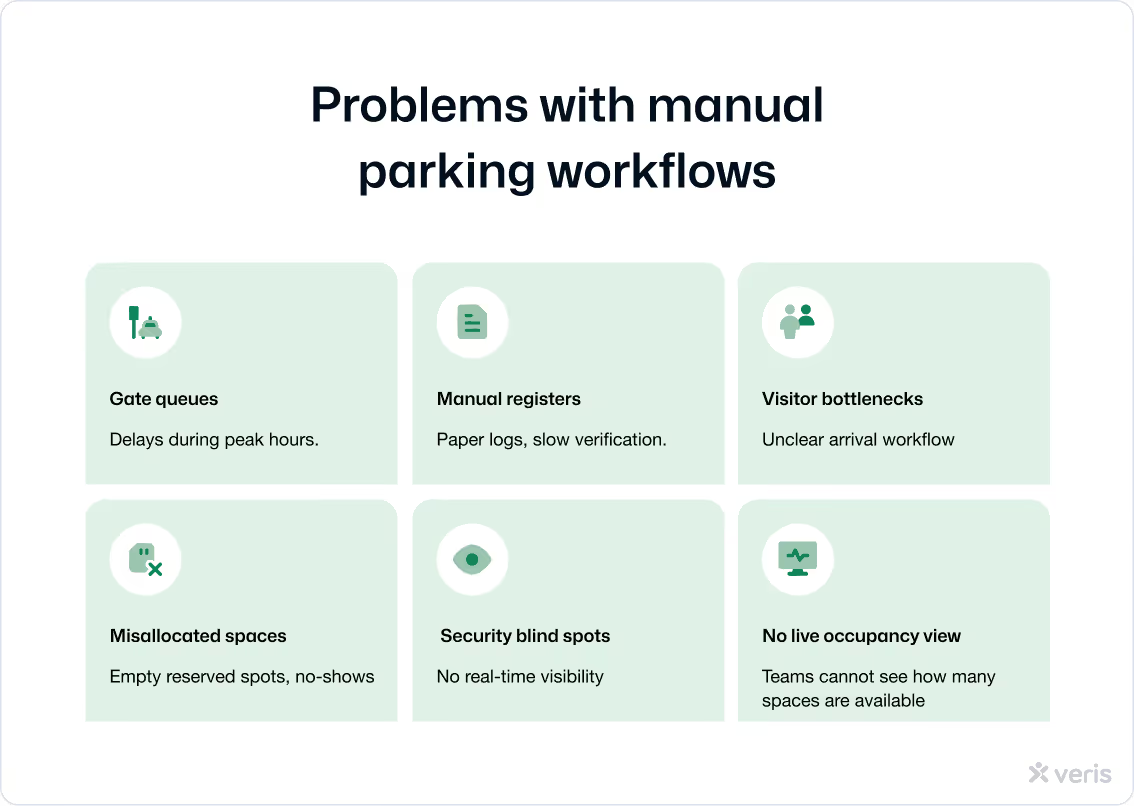
Common parking issues points include:
- Gate congestion : High inflow during morning and evening peak hours creates queues that slow movement across the campus.
- Manual approvals and logbooks : Facility teams often rely on calls, emails, or handwritten registers to track vehicle entry, which leads to errors and inconsistent records.
- Poor guest parking workflow : Visitors may arrive without preassigned spaces or entry credentials, resulting in delays and confusion at the gate.
- Misallocation or underutilization of spaces : Reserved slots may remain empty while other employees struggle to find parking.
- Security blind spots : Manual verification makes it difficult to maintain accurate and time-stamped entry and exit logs.
Employee frustration : Workplace surveys from CBRE indicate that friction during arrival impacts overall employee sentiment and productivity.
How do parking problems impact workplace experience productivity?
The parking challenges affect not only parking operations but the broader workplace experience:
- Time wasted during arrivals : Longer entry processes delay the start of the workday and disrupt meeting schedules.
- Delays to internal and external meetings : Employees, clients, and vendors may arrive late because of unforeseen parking delays.
- Negative visitor experience : A slow or unclear entry process creates a poor first impression for guests and partners.
- Security risks : Incomplete or manual logs limit the ability to track vehicle movement accurately during audits or incident investigations.
- Operational overload for facility teams : Staff spend significant time coordinating parking manually instead of focusing on higher-impact tasks.
Step by step process how smart parking works in an office campus ?
Smart parking brings structure to the movement of vehicles by combining automation, live data, and predefined workplace rules. Instead of relying on manual intervention, the system coordinates each stage of arrival, parking, and exit. Industry guidance from the International Parking & Mobility Institute (IPMI) highlights automation and digital credentialing as key drivers of smoother mobility across workplaces.
A typical smart parking workflow in an office or enterprise campus includes the following steps:
1. Pre-booking or allocation : Employees or facility teams assign a parking space in advance, or the system allocates one automatically based on rules such as shift timing, eligibility, and availability.
2. Authentication at the gate : When the vehicle arrives, the system identifies the parker through the chosen method—ANPR/LPR, QR code, RFID tag, or a digital pass. This ensures that only authorised vehicles move forward.
3. Real-time slot assignment and updates : Once authenticated, the system confirms the assigned space and updates the overall occupancy map. Facility teams see live availability and traffic flow on the dashboard.
4. Exit and settlement (If applicable) : At exit, the vehicle is recognised again, completing the record for the visit. In workplaces with paid or time-bound parking, settlement or automated invoicing is triggered.
5. Logging and reporting : Each entry and exit is recorded with a timestamp. Facility teams use these reports to understand peak periods, slot utilization, visitor flow, and operational needs.

Employee parking journey example
- The employee books or is assigned a parking space through the workplace app or web portal.
- At the gate, the system identifies the vehicle automatically.
- The employee proceeds to the designated area without requiring manual instructions.
- The exit is logged automatically, completing the record for the day.
This flow reduces wait times and creates a predictable start to the workday.
Visitor parking journey example
- The host creates an invite and assigns or requests a parking space for the visitor.
- The visitor receives a QR code or pass with arrival instructions.
- At entry, the visitor scans the code or is identified through ANPR/LPR.
- The system directs the vehicle to an appropriate area, and the host is notified of arrival.
- The visit is logged, supporting compliance and security requirements.
This creates a smoother welcome experience and reduces operational work for front desk and facility teams.
What technologies are used in smart parking systems?
Modern smart parking systems include a combination of hardware, software, and authentication tools that help workplaces manage vehicle flow with accuracy and consistency. Industry groups such as the International Parking & Mobility Institute (IPMI) note that parking operations are steadily adopting digital identification and automation methods to support safer and more predictable mobility across office environments.

ANPR / LPR-Based Parking
Automatic Number Plate Recognition (ANPR), also known as License Plate Recognition (LPR), uses cameras and optical character recognition to detect and identify vehicle plates as they approach a gate.
Key functions include:
- Real-time vehicle identification
- Automated gate opening once a plate is matched with an approved list
- Timestamped entry and exit logs
- Reduced dependence on manual checking
ANPR/LPR is widely adopted in large campuses where high throughput during peak hours requires fast and accurate vehicle authentication.
QR code parking systems
QR-based entry is often used for visitors, vendors, temporary staff, and event guests. It is simple to deploy and does not require additional hardware beyond scanners or kiosks.
Core capabilities:
- Unique QR codes issued with meeting invites or temporary passes
- Quick scanning at entry kiosks or boom barriers
- Automatic log creation and host notifications
- Time-bound or single-use credential options
This method supports predictable guest movement and helps facility teams prepare in advance for visitor parking.
RFID / FASTag-based parking
Radio Frequency Identification (RFID) tags and in India, FASTag-enabled windshield tags, allow recurring vehicles to be recognized automatically. The system communicates with a reader mounted near the barrier to authenticate vehicles without physical interaction.
Key benefits for workplace flows include:
- Tap-free, sensor-driven authentication
- Reliable access for employees, fleets, and long-term contractors
- Consistent logging of entry and exit events
FASTag, regulated by the National Highways Authority of India (NHAI), also provides a standardized tag format used across the country.
IoT sensors / Slot-level detection
Some workplaces adopt IoT sensors for detailed tracking of individual parking bays. Sensors can be surface-mounted or embedded into the ground.
Key capabilities include:
- Occupancy detection for each slot
- Real-time availability mapping
- Directional guidance via digital displays
These are more common in structured parking facilities or large corporate campuses where granular visibility supports daily planning.
Authentication and credentialing layer
Across these technologies, the authentication layer can include:
- ANPR/LPR
- QR codes
- RFID/FASTag
- Digital or printed passes
- Mobile app–based tokens
These credentials ensure each arriving vehicle is verified in a consistent, secure way.
Gate automation elements
Automated gate hardware connects directly with the authentication systems to create a smooth entry experience:
- Boom barriers and bollards
- Entry/exit kiosks
- QR and RFID scanners
- LED displays showing status messages
- Trigger systems that respond to authenticated identifiers
Together, these components enable fast, accurate entry and exit without requiring manual clearance.
How to choose the right smart parking system for your office?
Selecting the right smart parking system depends on the unique characteristics of each office campus. Workplaces globally often have different traffic patterns, authentication needs, and compliance expectations, so decisions should be based on operational realities rather than assumptions.
Key factors to evaluate include:
• Traffic volume : High-density campuses with peak-hour surges may benefit from ANPR for faster throughput, while smaller offices may prefer QR or RFID-based flows.
• Security needs : Regulated sectors—such as BFSI, pharma, or tech parks—often require strict identity verification and audit-friendly logs. ANPR combined with access control integration provides strong traceability.
• Visitor vs employee mix : Campuses with frequent client meetings or contractor activity may need QR-based visitor workflows, while recurring employees benefit from ANPR or RFID tags.
• Geography & compliance : Local guidelines, FASTag availability (India), camera placement constraints, and building layout influence which technology performs best.
• Budget & infrastructure readiness : Cost is shaped by hardware requirements, the number of gates, physical wiring conditions, and the complexity of integrations. A pilot helps validate suitability before making larger investments.
This evaluation ensures technology matches the workplace environment and supports predictable, efficient parking flows.
What are the benefits of smart parking systems for enterprises?
Smart parking systems support the daily movement of employees, visitors, vendors, and fleets by creating order, predictability, and visibility across parking operations. Research from the International Parking & Mobility Institute (IPMI) indicates that digital parking systems help organizations reduce congestion, improve safety, and achieve better operational planning by using real-time occupancy data and automated vehicle identification.
Below are the key benefits enterprises experience when adopting a smart parking system, especially across large office campuses globally.
1. Better utilization of limited parking space : Smart parking shows how many spaces are occupied, reserved, or available at any moment. This helps facility teams make informed decisions about allocation, shift-based planning, and visitor scheduling. Underutilized or blocked spaces become visible, allowing efficient redistribution.
2. Reduced congestion at entry and exit gates : Automated authentication, whether through ANPR, RFID, FASTag, or QR, helps vehicles move through gates without manual checks. This reduces bottlenecks during morning and evening peak hours.
3. Stronger security and audit readiness : Each entry and exit is logged with a timestamp and verified identifier. This supports compliance, incident tracking, and overall security governance. Facility teams gain a clear record of who arrived, when, and how long they stayed.
4. Consistent operational visibility : Smart parking provides dashboards with real-time occupancy and traffic patterns. This enables facility, real estate, and security teams to anticipate peak loads, adjust rules, and plan long-term space requirements.
5. Lower administrative overload : Manual parking coordination includes calls, emails, approvals, logbooks, all consumes time for frontline teams. With automation, facility staff can focus on high-value tasks rather than managing daily parking exceptions.
6. Better use of existing parking infrastructure : Accurate data helps workplaces defer unnecessary infrastructure expansion by using current parking more effectively. Enterprise mobility studies indicate that data-driven parking management often reveals hidden capacity that manual processes do not capture.
Smart parking system benefits for employees
1. Predictable daily arrivals : Employees know exactly where to park or whether a space is available before entering the premises. This reduces arrival stress and improves the start-of-day experience.
2. Faster gate entry : Authentication happens automatically or through a simple credential scan. Employees do not need to stop at the gate for manual checks or approvals.
3. Integrated workplace experience : Parking becomes part of the employee’s daily workflow—connected to their workplace app, access systems, and schedules. This supports consistent and seamless movement through the workplace.
4. Improved reliability during peak hours : Employees arriving around similar times benefit from smoother flow and fewer delays caused by unpredictable vehicle queues.
Smart parking system benefits for visitors
1. Real-time operational control : Teams can monitor all parking zones, peak timings, traffic flow, and exceptions in one place. This makes it easier to troubleshoot issues and assist users when needed.
2. Automated entry & exit logs : Digital logs reduce dependency on manual registers and ensure accurate reporting for audits and compliance reviews.
3. Better coordination across teams : Parking data integrates with visitor management, access control, and workplace scheduling systems. This helps admins prepare for high-traffic days, VIP visits, or events.
4. Clear insights for future planning : Utilization analytics help facility leaders determine whether a site needs more spaces, fewer reserved slots, or new policies for employee parking rotation.
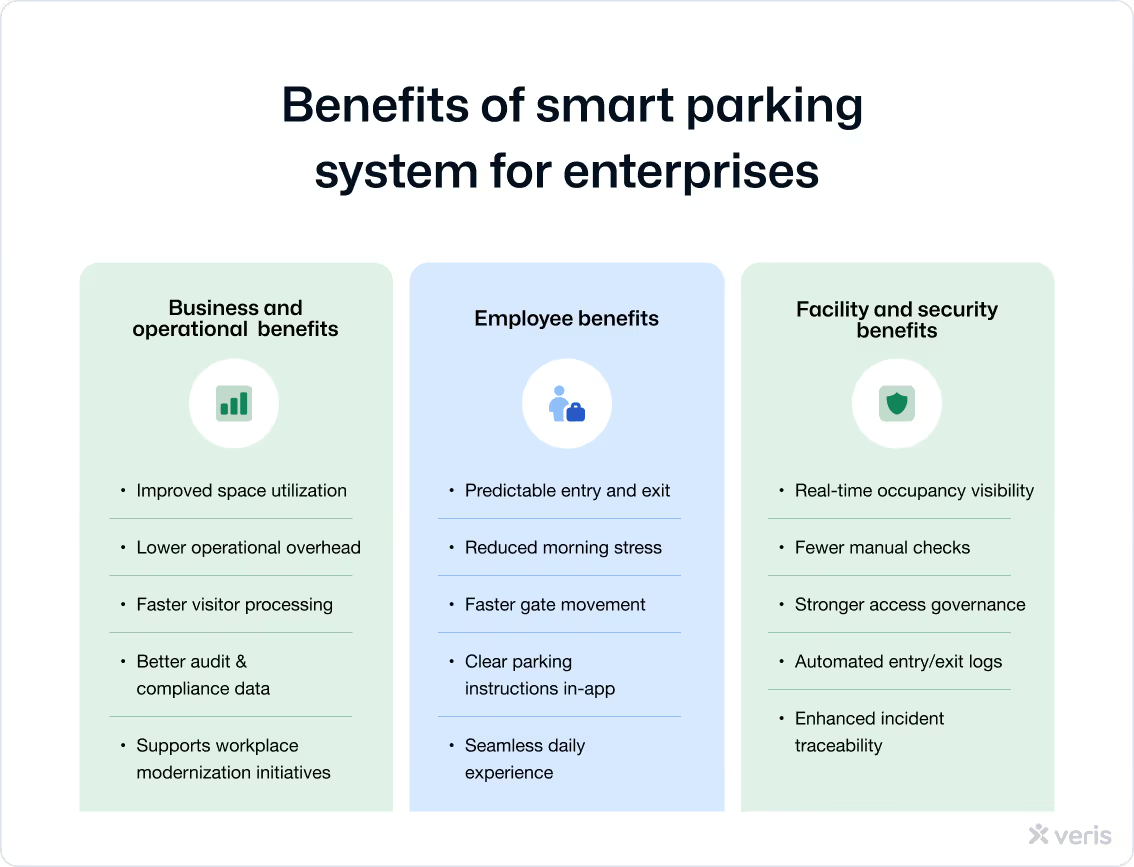
Smart parking transforms parking from a daily operational challenge into a predictable, data-driven workplace process. It supports employees, improves guest experience, reduces operational overhead, and gives organizations a clearer picture of how people move into their buildings every day. These benefits directly support workplace experience goals, an area that global occupier studies from CBRE highlight as a top priority for enterprise decision-makers.
Smart parking system cost and factors to consider before deployment?
Smart parking is not a one-size-fits-all investment. Costs vary depending on the size of the campus, the number of gates, the technologies selected, and the depth of integrations required. Industry analyses from the National Parking Association (NPA) and global workplace reports indicate that parking modernization projects typically include hardware costs, software licensing, installation, and long-term support.
Below is a clear view of what influences cost and what enterprises need to evaluate before moving forward.
The cost components of a smart parking system include:
1. Hardware requirements
Hardware is often the most visible part of the investment. Depending on the workplace, this may include:
- ANPR/LPR cameras
- QR code scanners or kiosks
- RFID/FASTag readers
- Automated boom barriers or access gates
- LED information displays
- Optional IoT sensors for slot-level detection
Hardware needs vary widely between single-building offices, multi-tower campuses, and structured parking facilities.
2. Software licensing and platform access
Smart parking relies on software for:
- Occupancy dashboards
- Authentication management
- Reporting and analytics
- Rule-setting for employee and visitor allocation
- Integrations with workplace systems
Pricing may follow annual subscription models or license-based structures depending on vendor and region.
3. Implementation and integration costs
Costs can include:
- On-site installation and calibration
- Integration with existing workplace systems (visitor management, access control, HRMS, etc.)
- Data mapping from previous systems
- Configuration of parking rules, roles, and user journeys
Workplaces with hybrid schedules or complex visitor flows often require additional configuration.
4. Operations, support and maintenance
Enterprise deployments typically include:
- Ongoing system monitoring
- Camera or hardware servicing
- Software updates
- Helpdesk or support SLAs for facility teams
These costs ensure long-term reliability and governance.
The factors that influence smart parking system cost include:
Costs differ based on workplace size and operational needs. Key factors include:
1. Number of gates and parking zones : More entry/exit points require additional hardware, wiring, and setup.
2. Authentication modes selected : ANPR, RFID, FASTag, QR, or hybrid models influence infrastructure requirements.
3. Level of integration : Deeper integration with workplace apps, access control, or visitor management may add configuration time.
4. Reporting expectations : Advanced analytics, audit logs, and custom dashboards may require tailored development.
5. Facility layout and traffic patterns : Large campuses or multi-level structures may require more sensors, guided signage, or specialized equipment.
What is the smart parking ROI?
Smart parking becomes valuable when it improves daily mobility and reduces operational friction. ROI typically comes from:
1. Reduced gate congestion and faster movement : Automation decreases manual intervention and supports predictable commutes.
2. Lower administrative time spent on parking : Facility and security teams save time previously spent coordinating approvals or managing disputes.
3. Better utilization of existing spaces : Live occupancy data helps workplaces uncover hidden capacity and avoid premature expansion. CBRE’s occupier insights highlight efficient use of existing workplace assets as a priority for enterprise decision-makers
4. Improved visitor and client experience : Smooth parking processes support stronger first impressions and reduce delays during meetings or audits.
5. Enhanced security and compliance : Accurate logs help during audits or incident reviews, reducing risk and strengthening governance.
What factors should workplaces consider before deploying smart parking?
Enterprises typically evaluate the following before beginning a smart parking project:
1. Current parking utilization and pain points : A baseline study helps determine the right technology mix.
2. Employee and visitor journeys : Mapping journeys ensures the experience fits your workplace culture and daily workflow.
3. Compliance, security and audit needs : Enterprises with high regulatory oversight (BFSI, pharma, IT services) may require detailed logs and strict access controls.
4. Scalability : Systems should accommodate future growth, new towers, additional employees, or expanded parking areas.
5. Change management and employee communication : Employee awareness is a critical success factor. Clear instructions reduce friction during rollout and help users trust the system.
Smart parking cost varies, but the return lies in smoother mobility, better use of space, stronger security visibility, and reduced operational effort. Understanding these cost drivers and deployment considerations helps workplace leaders build a reliable, future-ready mobility infrastructure that supports employees and visitors every day.
How to implement smart parking system?
Implementing smart parking requires a structured approach that aligns technology, workplace policies, and employee or visitor workflows. Industry guidance from the International Parking & Mobility Institute (IPMI) emphasizes that successful deployments are built on clear planning, accurate data, and a phased rollout that considers real mobility patterns within the workplace:
Below is a step-by-step framework that facility, security, and workplace teams can use to bring smart parking into an office or enterprise campus.
Implementing smart parking requires a structured approach that aligns technology, workplace policies, and employee or visitor workflows. Industry guidance from the International Parking & Mobility Institute (IPMI) emphasizes that successful deployments are built on clear planning, accurate data, and a phased rollout that considers real mobility patterns within the workplace:
Below is a step-by-step framework that facility, security, and workplace teams can use to bring smart parking into an office or enterprise campus.
Step 1 : Assess your current parking environment
Begin with a baseline understanding of how your parking operates today. This includes:
- Number of usable spaces vs. daily demand
- Gate congestion patterns
- Employee vs. visitor vs. vendor parking needs
- Pain points raised by staff or leadership
- Manual processes currently used for approvals and tracking
A data-backed assessment helps determine the right technology mix and identifies operational gaps.
Step 2 : Map employee and visitor journeys
According to the changing landscape workplaces globally have varied mobility patterns due to hybrid schedules, shift-based roles, and frequent visitor movement. Mapping journeys ensures the system supports everyone. Sothings to consider includes:
- Employee arrival timings
- How visitors receive parking instructions
- VIP or contractor parking flows
- Different towers or zones within the campus
This step ensures the end experience is simple and predictable.
Step 3 : Choose authentication technology
Select authentication methods that best fit your environment and mix of users:
- ANPR/LPR for automated identification at gates
- QR codes for visitors and temporary users
- RFID or FASTag for recurring vehicles
- Digital passes integrated with workplace apps
The chosen method should align with traffic volume, security requirements, and existing workplace tools.
Step 4 : Plan system integrations
Smart parking becomes more effective when it connects with other workplace systems. Typical integrations include:
- Visitor management systems (VMS)
- Employee identity or HRMS platforms
- Access control systems
- Workplace mobile apps
Integrated systems help unify arrival experiences and maintain accurate, shared records.
Step 5 : Deploy in a controlled pilot
Before campus-wide deployment, run a pilot at one gate or parking zone. A pilot helps verify:
- Camera accuracy and hardware placement
- Authentication speed and reliability
- User experience for employees and visitors
- Any operational adjustments needed based on real conditions
Therefore, conducting pilots reduces risk and provides clear insights for scaling.
Step 6 : Roll out in phases with clear communication
Employee communication is essential for adoption. Workplace studies from CBRE show that transparent change management drives smoother transitions in new mobility systems.
These provide teams with:
- Visual guides
- Email instructions
- Signage at gates
- FAQs and support contacts
A phased rollout allows teams to monitor feedback and adjust rules or operational flows.
Step 7 : Monitor data and continuously improve
After implementation, use the system’s reporting tools to evaluate:
- Peak-hour congestion
- Space utilization
- Visitor flow patterns
- Authentication success rates
- Exceptions and security logs
These insights help facility leaders refine policies, adjust allocations, plan future expansions, and ensure long-term efficiency.
The common mistakes to avoid while implementing smart parking system
Enterprises can avoid common roadblocks by being aware of these pitfalls during planning and deployment:
• No employee communication : Employees (and sometimes even security teams) must understand what changes are coming. Lack of communication often leads to confusion, poor adoption, and unnecessary gate delays.
• Overcomplicating the workflow : Adding too many rules or exceptions makes the system harder to manage. A simple, consistent workflow leads to smoother operations and fewer errors.
• Choosing the wrong technology : Selecting ANPR, RFID, or QR without understanding real workplace patterns, gate placement, or camera needs can result in inaccurate authentication. Technology selection should match site conditions and traffic behavior.
• Skipping the pilot phase : A controlled pilot helps validate camera angles, peak-hour flow, and authentication accuracy. Skipping this step increases the risk of operational disruption during full rollout.
• Not aligning IT, facility, and security teams : Smart parking is a cross-functional implementation. Without clear roles and shared ownership, integrations and daily operations may face delays.
• Ignoring data governance and audit needs : Entry/exit logs, access permissions, and identity records must be maintained accurately for compliance. Poor data handling can create gaps in auditability.
A successful smart parking implementation blends the right technology with real operational context. By assessing your environment, mapping journeys, integrating systems, piloting carefully, and communicating clearly, workplaces can build a reliable parking experience that improves daily mobility and supports long-term planning.
How does smart parking connect with the workplace automation ecosystem?
Workplaces operate through a network of interconnected systems—identity management, access control, visitor workflows, scheduling tools, and mobility platforms. When smart parking becomes part of this ecosystem, the workplace gains real-time visibility, smoother movement, and a unified operational view. Research from the Gensler Research Institute highlights that connected workplace technologies significantly influence employee experience and arrival efficiency.
Integrating smart parking with visitor management & access control
1. A consistent identity across the workplace
Integration links vehicle credentials with employee or visitor identity systems. This allows:
- Automatic validation at the gate
- Synchronized entry permissions across parking and building access
- Reliable presence tracking
- A unified audit trail
The International Facility Management Association (IFMA) emphasizes the value of integrated access systems for improving operational control and reducing manual checkpoint.
2. A smoother visitor arrival experience
Visitors receive a single communication containing meeting details, parking instructions, and entry credentials. When their vehicle is authenticated at the gate, the host is notified instantly and the visit is logged across systems.
Integration links vehicle credentials with employee or visitor identity systems. This allows:
- Automatic validation at the gate
- Synchronized entry permissions across parking and building access
- Reliable presence tracking
- A unified audit trail
The International Facility Management Association (IFMA) emphasizes the value of integrated access systems for improving operational control and reducing manual checkpoint.
2. A smoother visitor arrival experience
Visitors receive a single communication containing meeting details, parking instructions, and entry credentials. When their vehicle is authenticated at the gate, the host is notified instantly and the visit is logged across systems.
3. Better coordination during peak hours
Integrated systems help workplace teams prepare for days with higher footfall. Admins can:
- Pre-assign parking
- Issue temporary parking credentials
- Adjust rules for reserved or VIP spaces
- Coordinate with security teams using shared dashboards
This reduces last-minute manual interventions.
How a unified workplace platform enhances mobility?
A connected ecosystem strengthens workplace mobility, safety, and predictability across all user journeys. Insights from JLL’s Global Future of Work Survey indicate that organizations are prioritizing integrated digital systems to support hybrid work, identity management, and smooth daily operations.
1. Shared data for better decision-making : When parking, visitor, access, and occupancy systems communicate, facility and real estate leaders gain a more holistic view of how people move into and across the workplace.
2. Fewer operational silos : Disconnected systems lead to duplicated work and inconsistent data. Integration ensures that updates, like meeting cancellations, visitor reschedules, or shift changes, automatically sync across all related workplace touchpoints.
3. Support for hybrid workflows : Hybrid schedules create fluctuating demand for parking and access. Integrated systems help workplaces adjust dynamically by aligning occupancy expectations with real-time data.
4. Stronger security and compliance governance : A unified platform consolidates vehicle authentication logs, access events, and visitor identity records. This strengthens audit readiness and reduces blind spots.
Smart parking delivers maximum value when it operates within a connected workplace environment, combining data from access control, visitor management, scheduling tools, and employee identity systems. This unified approach leads to smoother arrival experiences, improved security visibility, and better operational planning for office campuses.
How does Veris support smart parking for modern workplaces?
Veris Smart parking becomes most effective when it fits naturally into the wider workplace experience. Veris approaches parking as a core part of the daily movement of employees, visitors, vendors, and partners. Instead of treating parking as a standalone function, it is integrated into a broader ecosystem of workplace tools designed to support predictable arrivals, secure access, and real-time operational visibility.
Veris Smart Parking is built around the practical needs observed across enterprise campuses, gate throughput, visitor coordination, shift-based arrivals, and compliance-friendly logging. The platform brings together automation, identity management, and live occupancy insights to help workplace teams manage parking with clarity and consistency.
1. Support for multiple authentication methods
Workplaces can operate with ANPR/LPR, QR codes, RFID/FASTag tags, or digital passes depending on user type and site requirements. This flexibility helps accommodate employees, visitors, contractors, and recurring service vehicles.
2. Integrated employee and visitor journeys
Parking flows are connected with employee scheduling tools and visitor management.
Examples include:
- Visitors receiving parking details along with meeting invites
- Employees accessing parking through the same app they use for workplace tasks
- Hosts receiving automatic notifications when guests arrive at the gate
This reduces coordination work for admins and creates clear, predictable experiences.
3. Real-time dashboards for facility and security teams
Teams gain visibility into:
- Live occupancy levels
- Traffic flow at entry and exit points
- Peak-hour patterns
- Exceptions or rule-based alerts
This supports better planning during peak demand, VIP visits, or multi-building operations.
4. Automated entry and exit logging
Each authenticated vehicle event is time-stamped and stored, creating a complete record for compliance reviews, audits, and internal reporting. This helps maintain security governance across campuses.
5. Alignment with workplace automation systems
Veris Smart Parking integrates with:
- Visitor management
- Access control
- Employee directories or HRMS
- Workplace mobile apps
The result is a unified view of who is expected, who has arrived, and who is currently on-site.
Who is Veris smart parking system designed for?
- Facility and workplace teams managing daily parking operations
- Security teams looking for clear entry and exit logs
- Real estate and CRE leaders who require occupancy insights for planning
- Employees seeking predictable, consistent arrival experiences
- Visitors who need straightforward access without manual approvals
Veris Smart Parking is designed around the idea that parking is an essential touchpoint in the workday. By connecting authentication, identity, and workplace systems, it helps organizations create a more predictable, secure, and coordinated experience, without adding complexity for employees or facility teams.
Frequently asked questions (FAQs)
Final summary and next steps
Smart parking plays a meaningful role in shaping how people begin and end their workday. By combining automation, identity management, and real-time occupancy insights, workplaces can reduce congestion, simplify visitor arrivals, strengthen security, and support more efficient facility operations. The technologies and processes outlined in this guide show how organizations can build predictable, well-coordinated parking experiences across office campuses of any size.
As workplaces adopt more connected systems, visitor management, access control, hybrid scheduling, and mobility platforms, smart parking becomes an essential part of a unified arrival journey. For facility, security, and real estate teams, this creates an opportunity to plan with greater clarity and align daily operations with long-term workplace goals.
If your organization is exploring ways to modernize parking or improve daily mobility, you can connect with the Veris team to learn more, walk through use cases, or see how these capabilities can support your workplace environment.
→ Explore smart parking systems or begin a conversation with our workplace specialists.

.png)



.avif)
.avif)


.avif)